


The Styling Shift: Less Showroom, More Lifestyle
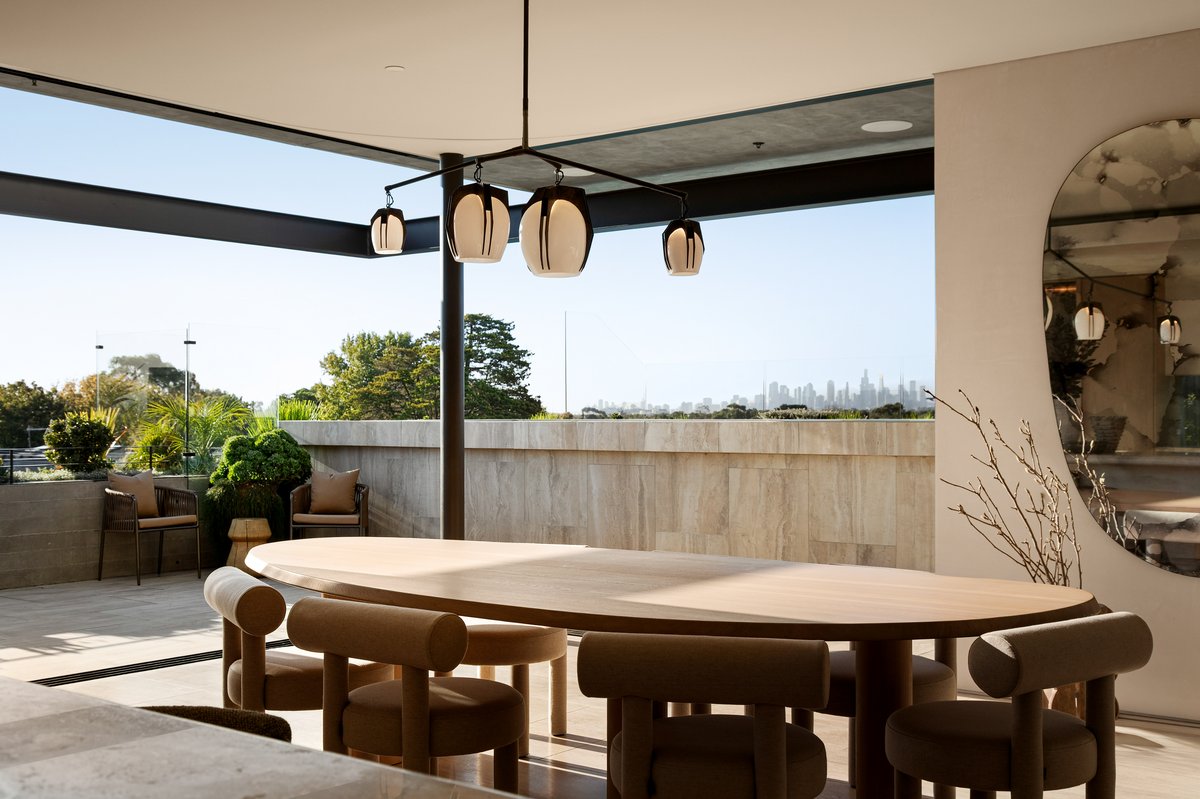


In a selective prestige property market, styling to sell has evolved beyond aesthetics into a powerful way to tell the story of life within a home.
Buyers are taking an increasingly discerning and considered approach. Value, location and amenity remain important, but so too does picturing how their own possessions, routines and aspirations will translate to the space.
The styling should immediately communicate the calibre of the home, interior designer Philip Boon says. In a market where buyers are more strategic, it is important for them to understand what a property represents long before they walk in the door, he explains.
"When someone's looking online, they should instantly gravitate to a listing and think, 'Oh, this is of the level of the prestige that I want to be buying at’.”
St Kilda West Project by Nisk Design & Philip Boon Interiors
Photography by Lillie Thompson
Cayley Scrooby, interior stylist at Sovereign Interiors, says the goals of styling have changed to meet the different expectations of today’s prestige buyers.
Decision making is often slowed down when a buyer is scrambling to interpret the space themselves, she says.
“Previously, luxury buyers were purchasing based on aspiration quite quickly. Today, buyers are more analytical and looking carefully at long-term value, quality and lifestyle alignment. As a result, styling now needs to feel far more intentional.
“Every piece selected should help buyers understand not only how beautiful the home is, but how effortlessly they can see themselves living there.”
Boon says prestige buyers are highly design literate, and the detail in the decor, art and furniture choices should reflect that depth of understanding and appreciation. Above all, the choices should communicate exclusivity.
“People are more educated on what they're looking for, and now they want to see something that inspires them,” Boon says. “We're asked to go into a prestige house and create something that no one's seen before.
"If you're looking at a $5 million to $10 million house, and above, buyers have the money to spend on art, furniture and interior pieces, so you want to make sure that home is being viewed by the potential buyer as something they can be in, rather than something that is generic."
Boon and his husband Nicholas Pucinischi, director of architectural building design studio Nisk Design, draw on relationships with artists and collectors to source unique items that give their clients’ properties a distinct identity. "We work with vintage showrooms, and a lot of different artists and sculptors, to offer our clients pieces that haven't been seen before."
St Kilda West Project, by Nisk Design & Philip Boon Interior
This informed their approach at their St Kilda West Project, which was shortlisted in the residential design category at the 2025 Australian Interior Design Awards.
Scrooby also says luxury home styling should never be prescriptive. “The goal is to create an aspirational lifestyle story,” she says. “We focus on understanding the architecture, location, and likely buyer profile, then curate spaces that evoke emotion.”
“A waterfront property may centre around entertaining and relaxed coastal sophistication, whereas a penthouse may lean toward understated elegance and easy maintenance.”
Sovereign Interiors
Meanwhile, the home’s architecture should always be the hero.
“Our role is to complement the design language rather than overpower it,” Scrooby says. “We study the material palette, proportions, natural light and architectural detailing, then introduce furniture and styling pieces that create harmony.
“In luxury properties, restraint is often more powerful than excess.”